
Sidebar
Table of Contents
AF 201B Unit 21 Orientation Lesson 8 - PPLms/Maint/830
The student will become familiar with NTSB 830, Private Pilot privileges, limitations and maintenance.
The student should display an understanding of NTSB 830, Private Pilot privileges, limitations and maintenance.
Grading Items
NTSB 830 - Reporting Requirements and Preservation of Wreckage
Immediate Notification Required
- Flight control system malfunction or failure
- Inability of any required flight crewmember to perform normal flight duties as a result of injury or illness
- Failure of any internal turbine engine component that results in the escape of debris other than out the exhaust path
- In-flight fire
- Aircraft collision in flight
- Damage to property, other than the aircraft, estimated to exceed $25,000 for repair (including materials and labor) or fair market value in the event of total loss, whichever is less.
- Release of all or a portion of a propeller blade from an aircraft, excluding release caused solely by ground contact
- A complete loss of information, excluding flickering, from more than 50 percent of an aircraft's cockpit displays (glass cockpit/G1000)
- An aircraft is overdue and is believed to have been involved in an accident.
Notification Methods
- Call the NTSB
- Notify the FAA, who would then notify the NTSB
- Operator must file a report within 10 days to the NTSB, if requested to do so, with the local NTSB field office
PIC Currency and Additional PIC Training Requirements
FAR 61.57 - Recency of Experience, Pilot in Command
No person may act as a pilot in command of an aircraft carrying passengers or of an aircraft certificated for more than one pilot flight crewmember unless that person has made at least three takeoffs and three landings within the preceding 90 days
The required takeoffs and landings were performed in an aircraft of the same category, class, and type (if a type rating is required), and, if the aircraft to be flown is an airplane with a tailwheel, the takeoffs and landings must have been made to a full stop in an airplane with a tailwheel.
No person may act as pilot in command of an aircraft carrying passengers during the period beginning 1 hour after sunset and ending 1 hour before sunrise, unless within the preceding 90 days that person has made at least three takeoffs and three landings to a full stop during the period beginning 1 hour after sunset and ending 1 hour before sunrise
Flight Review (FAR 61.56)
1 hour flight plus 1 hour ground instruction from a CFI.
Logbook endorsement from CFI
no person may act as pilot in command of an aircraft unless, since the beginning of the 24th calendar month before the month in which that pilot acts as pilot in command, that person has—
(1) Accomplished a flight review given in an aircraft for which that pilot is rated by an authorized instructor and
(2) A logbook endorsed from an authorized instructor who gave the review certifying that the person has satisfactorily completed the review.
Private Pilot Privileges and Limitations (FAR 61.113)
- No person who holds a private pilot certificate may act as pilot in command of an aircraft that is carrying passengers or property for compensation or hire except:
- The flight is only incidental to that business or employment; and The aircraft does not carry passengers or property for compensation or hire.
- A private pilot may not pay less than the pro rata share of the operating expenses of a flight with passengers, provided the expenses involve only fuel, oil, airport expenditures, or rental fees.
- A private pilot may act as pilot in command of a charitable, nonprofit, or community event flight described in §91.146, if the sponsor and pilot comply with the requirements of §91.146.
- A private pilot may be reimbursed for aircraft operating expenses that are directly related to search and location operations, provided the expenses involve only fuel, oil, airport expenditures, or rental fees, and the operation is sanctioned and under the direction and control of:
- A local, State, or Federal agency; or
- An organization that conducts search and location operations.
- A private pilot who is an aircraft salesman and who has at least 200 hours of logged flight time may demonstrate an aircraft in flight to a prospective buyer.
- A private pilot who meets the requirements of §61.69 may act as a pilot in command of an aircraft towing a glider or unpowered ultralight vehicle.
- Basic Med
Maintenance Records and Inspection Compliance
Annual Inspection
100hr Inspection
Pitot/Static Inspection
Airworthiness Directives
Maintenance Records: Owner/Operator is responsible for maintaining the aircraft in an airworthy condition, including compliance with all applicable ADs and assuring that maintenance is properly recorded. (PHAK)
Operations with Inoperative Equipment
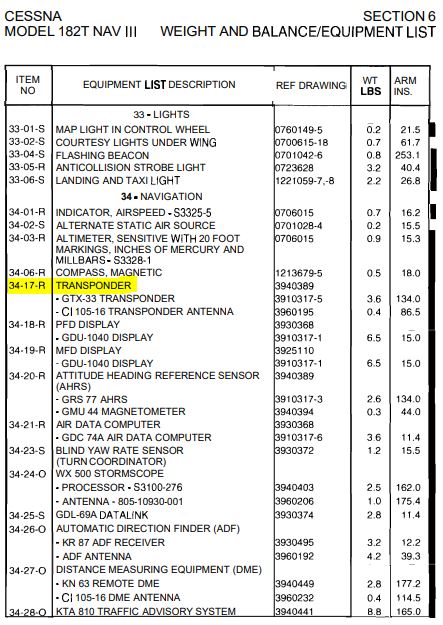
- Using the deferral provision of 14 CFR, part 91, section 91.213(d), the pilot determines whether the inoperative equipment is required by type design, 14 CFR, or ADs. If the inoperative item is not required, and the aircraft can be safely operated without it, the deferral may be made. The inoperative item shall be deactivated or removed and an INOPERATIVE placard placed near the appropriate switch, control, or indicator. If deactivation or removal involves maintenance (removal always will), it must be accomplished by certificated maintenance personnel and recorded in accordance with 14 CFR part 43. (PHAK Ch 9)
- This deferral is not an option if a MEL is in place
Special Flight Permits
A special flight permit is a Special Airworthiness Certificate authorizing operation of an aircraft that does not currently meet applicable airworthiness requirements but is safe for a specific flight.
FAR Part 43 - Preventative Maintenance
Except for holders of a sport pilot certificate, the holder of a pilot certificate issued under part 61 may perform preventive maintenance on any aircraft owned or operated by that pilot which is not used under part 121, 129, or 135 of this chapter. The holder of a sport pilot certificate may perform preventive maintenance on an aircraft owned or operated by that pilot and issued a special airworthiness certificate in the light-sport category.
Updates of databases in installed avionics meeting the conditions of this paragraph are not considered maintenance and may be performed by pilots provided:
- The database upload is:
- Initiated from the flight deck;
- Performed without disassembling the avionics unit; and
- Performed without the use of tools and/or special equipment.
- The pilot must comply with the certificate holder's procedures or the manufacturer's instructions.
- The holder of operating certificates must make available written procedures consistent with manufacturer's instructions to the pilot that describe how to:
- Perform the database update; and
- Determine the status of the data upload.
Preventative Maintenance
Preventive maintenance is regarded as simple or minor preservation operations and the replacement of small standard parts, not involving complex assembly operations. Allowed items of preventative maintenance are listed and limited to the items of 14 CFR part 43, appendix A©. (PHAK Ch 9)
(1) Removal, installation, and repair of landing gear tires.
(2) Replacing elastic shock absorber cords on landing gear.
(3) Servicing landing gear shock struts by adding oil, air, or both.
(4) Servicing landing gear wheel bearings, such as cleaning and greasing.
(5) Replacing defective safety wiring or cotter keys.
(6) Lubrication not requiring disassembly other than removal of nonstructural items such as cover plates, cowlings, and fairings.
(7) Making simple fabric patches not requiring rib stitching or the removal of structural parts or control surfaces. In the case of balloons, the making of small fabric repairs to envelopes (as defined in, and in accordance with, the balloon manufacturers' instructions) not requiring load tape repair or replacement.
(8) Replenishing hydraulic fluid in the hydraulic reservoir.
(9) Refinishing decorative coating of fuselage, balloon baskets, wings tail group surfaces (excluding balanced control surfaces), fairings, cowlings, landing gear, cabin, or cockpit interior when removal or disassembly of any primary structure or operating system is not required.
(10) Applying preservative or protective material to components where no disassembly of any primary structure or operating system is involved and where such coating is not prohibited or is not contrary to good practices.
(11) Repairing upholstery and decorative furnishings of the cabin, cockpit, or balloon basket interior when the repairing does not require disassembly of any primary structure or operating system or interfere with an operating system or affect the primary structure of the aircraft.
(12) Making small simple repairs to fairings, nonstructural cover plates, cowlings, and small patches and reinforcements not changing the contour so as to interfere with proper air flow.
(13) Replacing side windows where that work does not interfere with the structure or any operating system such as controls, electrical equipment, etc.
(14) Replacing safety belts.
(15) Replacing seats or seat parts with replacement parts approved for the aircraft, not involving disassembly of any primary structure or operating system.
(16) Trouble shooting and repairing broken circuits in landing light wiring circuits.
(17) Replacing bulbs, reflectors, and lenses of position and landing lights.
(18) Replacing wheels and skis where no weight and balance computation is involved.
(19) Replacing any cowling not requiring removal of the propeller or disconnection of flight controls.
(20) Replacing or cleaning spark plugs and setting of spark plug gap clearance.
(21) Replacing any hose connection except hydraulic connections.
(22) Replacing prefabricated fuel lines.
(23) Cleaning or replacing fuel and oil strainers or filter elements.
(24) Replacing and servicing batteries.
(25) Cleaning of balloon burner pilot and main nozzles in accordance with the balloon manufacturer's instructions.
(26) Replacement or adjustment of nonstructural standard fasteners incidental to operations.
(27) The interchange of balloon baskets and burners on envelopes when the basket or burner is designated as interchangeable in the balloon type certificate data and the baskets and burners are specifically designed for quick removal and installation.
(28) The installations of anti-misfueling devices to reduce the diameter of fuel tank filler openings provided the specific device has been made a part of the aircraft type certificiate data by the aircraft manufacturer, the aircraft manufacturer has provided FAA-approved instructions for installation of the specific device, and installation does not involve the disassembly of the existing tank filler opening.
(29) Removing, checking, and replacing magnetic chip detectors.
(30) The inspection and maintenance tasks prescribed and specifically identified as preventive maintenance in a primary category aircraft type certificate or supplemental type certificate holder's approved special inspection and preventive maintenance program when accomplished on a primary category aircraft provided:
(i) They are performed by the holder of at least a private pilot certificate issued under part 61 who is the registered owner (including co-owners) of the affected aircraft and who holds a certificate of competency for the affected aircraft (1) issued by a school approved under §147.21(e) of this chapter; (2) issued by the holder of the production certificate for that primary category aircraft that has a special training program approved under §21.24 of this subchapter; or (3) issued by another entity that has a course approved by the Administrator; and
(ii) The inspections and maintenance tasks are performed in accordance with instructions contained by the special inspection and preventive maintenance program approved as part of the aircraft's type design or supplemental type design.
(31) Removing and replacing self-contained, front instrument panel-mounted navigation and communication devices that employ tray-mounted connectors that connect the unit when the unit is installed into the instrument panel, (excluding automatic flight control systems, transponders, and microwave frequency distance measuring equipment (DME)). The approved unit must be designed to be readily and repeatedly removed and replaced, and pertinent instructions must be provided. Prior to the unit's intended use, and operational check must be performed in accordance with the applicable sections of part 91 of this chapter.
Reading List


